Google Pixel Fold at $350: Refurbished and Still Relevant
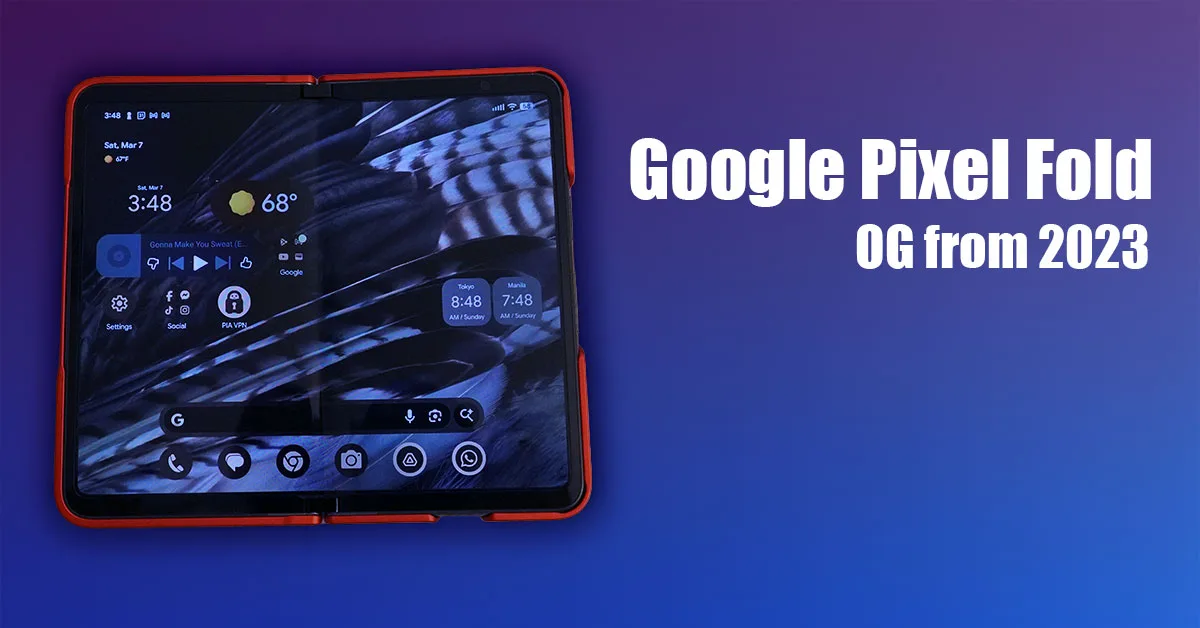
The Foldable Dream on a “Fun” Budget
I’ve been watching foldable phones since they were a gimmick. Screens that crease, hinges that fail after a few months, price tags that assumed you were either a tech journalist or had money to throw at experiments. For a long time, foldables felt like they were in permanent “wait and see” territory.
Then the original Google Pixel Fold started dropping in price.
We’re talking $350 for a refurbished unit — a phone that launched at $1,799. At that price point, a foldable stops being a luxury purchase and becomes an interesting experiment. So I ran the experiment.
This is what happened.
The “Downgrade” That Didn’t Feel Like One
My daily driver going into this was the Pixel 10 Pro. Let’s be clear: on paper, that’s the better phone. Newer processor, more current software support, sharper cameras. The numbers don’t lie.
But here’s the thing about paper specs — you don’t live in a spec sheet. You live on the phone.
| Feature | Pixel 10 Pro | Pixel Fold (OG) |
|---|---|---|
| Launch Price | $999 | $1,799 |
| Refurb Price | ~$600 | ~$350 |
| Screen (outer) | 6.3” OLED | 5.8” OLED |
| Screen (inner) | — | 7.6” OLED |
| Processor | Tensor G5 | Tensor G2 |
| Camera System | Flagship | Very capable |
| Android Updates | Through 2030 | Limited |
| Form Factor | Slab | Foldable |
What the table doesn’t show: the experience of unfolding a phone and having a near-tablet in your pocket. That’s hard to quantify, but it’s real.
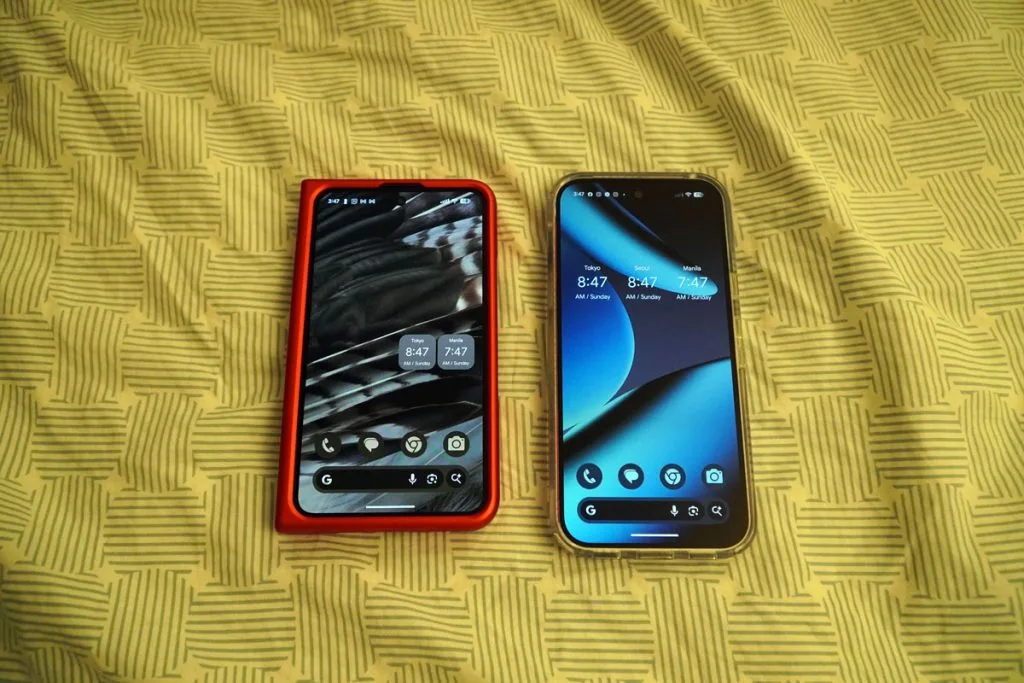
The Pixel Fold’s inner screen isn’t some cramped compromise — it’s 7.6 inches. When you unfold it, you’re holding something that genuinely changes how you interact with your phone. Multitasking feels natural instead of forced. Reading is comfortable. Watching video actually feels like watching video.
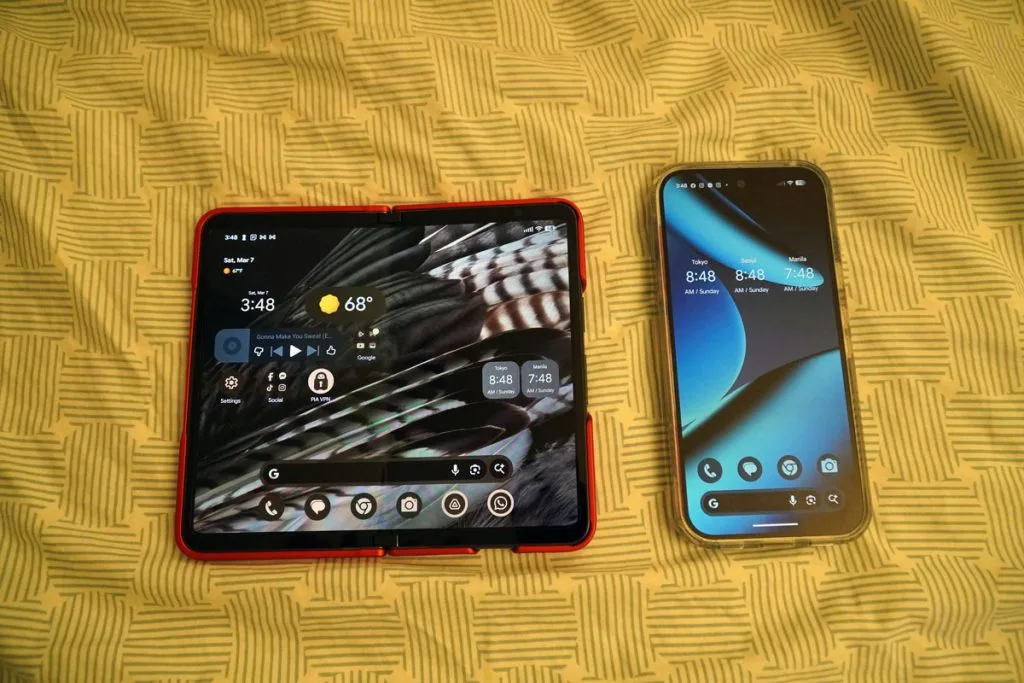
The processor gap (G2 vs G5) is real but not painful in daily use. App launches are slightly slower. Gaming benchmarks are lower. For everything I actually do — email, Slack, browser, YouTube, documents — I never noticed the difference.
The “Button” Struggle & The Chicago Bulls Fix
Here’s the one thing nobody told me to expect: the Pixel Fold’s button placement is weird.
The power button and volume buttons are positioned in a way that makes accidental presses common, especially when you’re gripping the phone to unfold it. It’s not a dealbreaker, but it’s annoying. Every few unfolds I’d accidentally wake the screen or trigger assistant.
The fix cost $14.
I picked up a Foluu case — a slim case designed specifically for the Pixel Fold — and it solved the problem completely. The case’s button guards give you enough tactile feedback that you stop hitting buttons by accident. The bulk it adds is minimal.
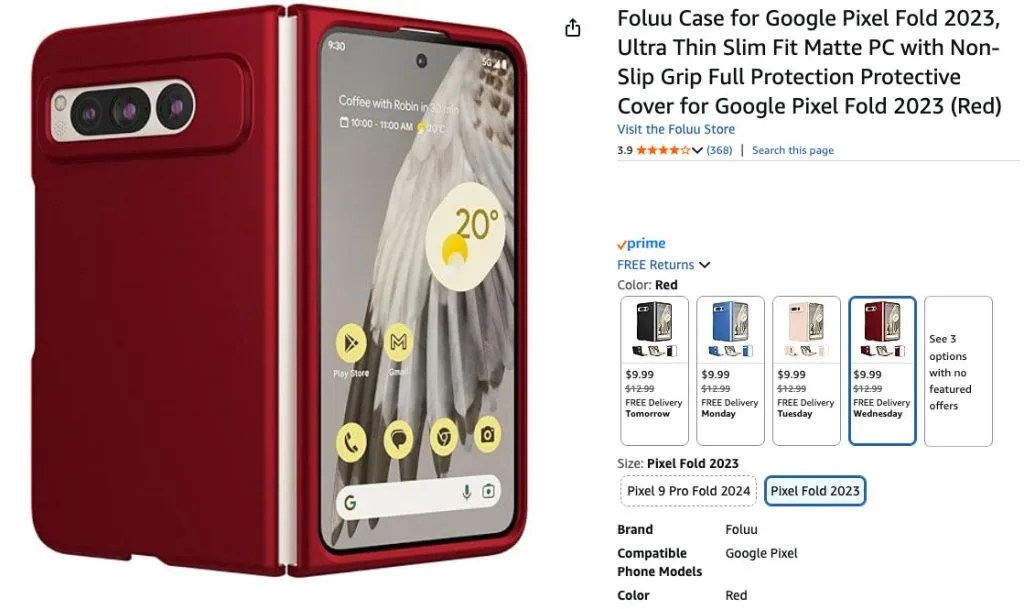
If you pick up a Pixel Fold, grab a case from day one. Not eventually — day one.
Buy Foluu case on Amazon →Why Pixel Still Wins the “Bloatware War”
I’ve spent time on Samsung Galaxy folds. They’re impressive hardware, genuinely. But Samsung’s software layer is a whole thing. Apps you don’t want, UI choices you didn’t ask for, manufacturer overlays on top of Android on top of Google stuff.
The Pixel Fold is stock Android. It runs the way Android was meant to run.
No Bixby. No Samsung-specific apps pre-installed. No second app store trying to get you to buy things. Just Google’s Android, clean and fast, with Google’s excellent call screening and live translate features baked in at the system level.
For someone who lives in Google Workspace — Gmail, Drive, Docs, Calendar — the Pixel is the native environment. Google Meet opens without asking which app. Drive attachments preview inline. Calendar invites just work. Nothing routes you through a compatibility layer to do something basic.
Resolution & Reality: The Two-Screen Life
The outer screen is a 5.8-inch OLED. It’s smaller than most modern flagship phones, and that takes some adjustment. Going from the Pixel 10 Pro’s 6.3 inches to the Fold’s outer screen felt slightly cramped for the first two days.
Then I started unfolding it.
The inner screen changes the calculus entirely. For tasks where you need real estate — reading long articles, editing documents, watching video — you unfold. For quick tasks — checking a notification, sending a short reply, looking something up — the outer screen is fine.
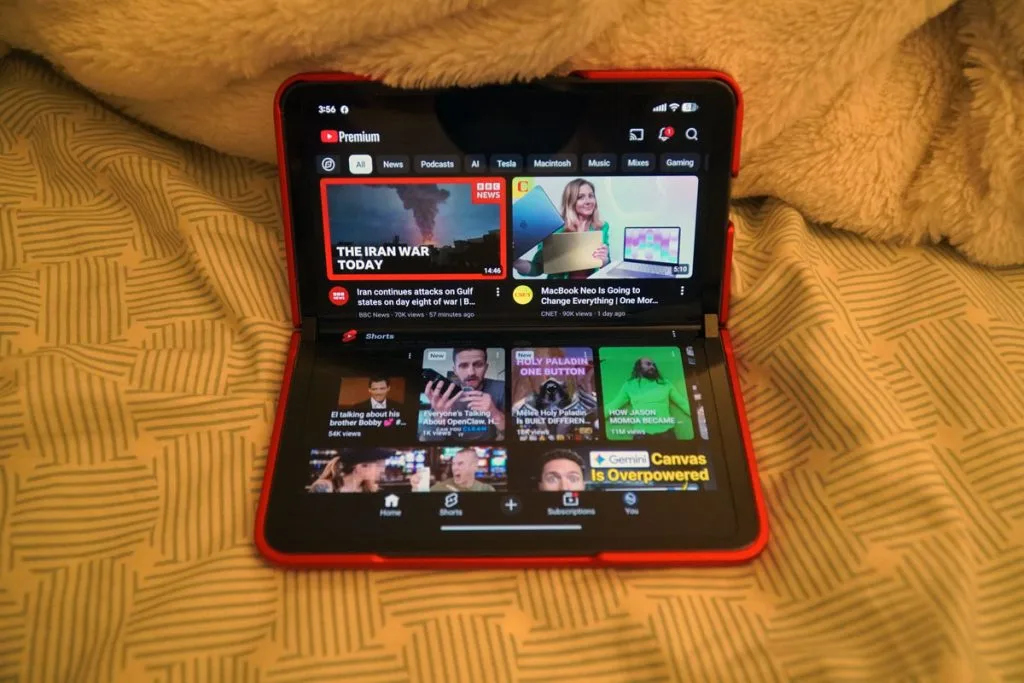
You adapt to the two-screen workflow faster than you’d expect. Within a week I was unfolding automatically for certain apps and staying folded for others. It becomes muscle memory.
My New Mobile Office: Google Drive & Dictation
Here’s where the Pixel Fold surprised me the most.
The unfolded form factor is genuinely useful for productivity. I’ve been using it as a mobile document workstation in a way I never could with a regular phone. Google Docs on the full inner screen, with a full keyboard layout visible, is a legitimately different experience.
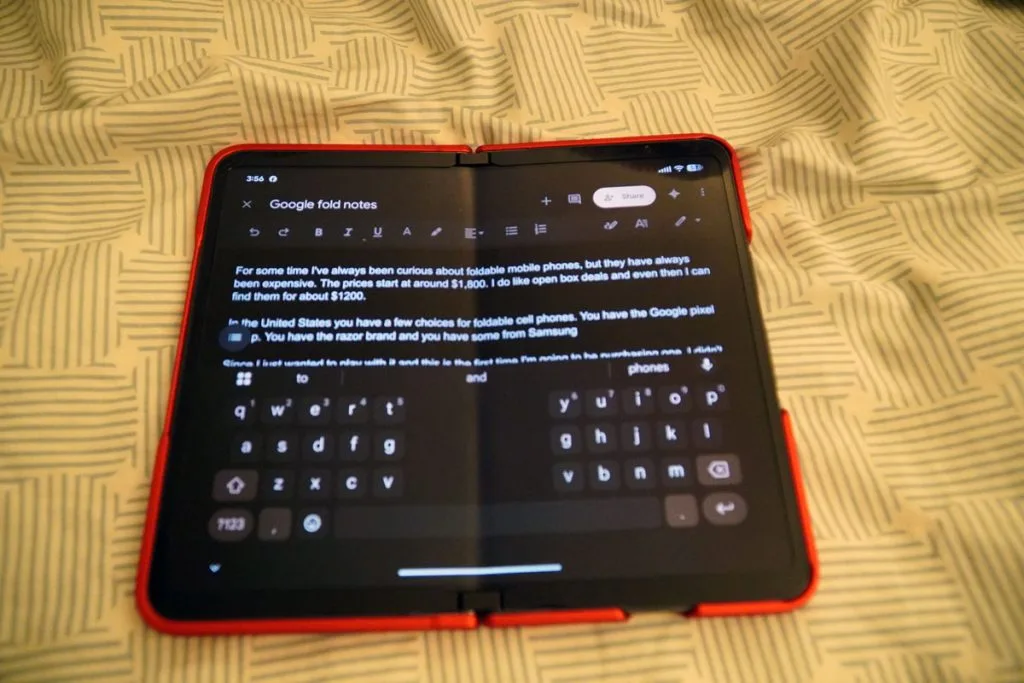
But the real sleeper feature? Voice dictation.
The Pixel Fold’s microphone picks up voice cleanly. I’ve been using Google’s dictation more than I’ve typed on mobile in months. In-car, at a coffee shop, between meetings — I can dictate a full reply or short note and it comes out accurate, fast. For a developer who’s always mid-thought and doesn’t want to stop to type, this is unexpectedly useful.
If you want to try the Pixel ecosystem and the mobile Google Fi experience, the referral link below gives you credit: Google Fi referral — get $20 credit.
The Final Verdict: Was it Worth the $350?
Yes. Clearly yes.
The caveats are real: the software update timeline is limited compared to newer Pixels, the outer screen is small, and the G2 processor isn’t going to win benchmarks. If you need the bleeding edge, buy a current-generation device.
But if you’ve been curious about foldables and couldn’t justify the flagship price, $350 for a refurbished Pixel Fold is a genuinely compelling entry point. The hardware is solid, the software is clean, and the form factor delivers on its promise in daily use in a way I didn’t fully expect.
It’s not a replacement for my Pixel 10 Pro. It’s an experiment that earned a permanent spot in my bag.
If you’re also thinking about the camera side of your creator setup, I compared the Sony ZV-E10 vs a6500 — same “is it actually worth the tradeoff” question, different category.
Google Pixel Fold on Amazon →Affiliate disclosure: This post contains Amazon affiliate links. Purchases made through these links may earn a small commission at no additional cost to you. See our disclosure page for details.
Leave a comment
Comments are moderated, so it may take a bit before yours appears. Your email is never published.